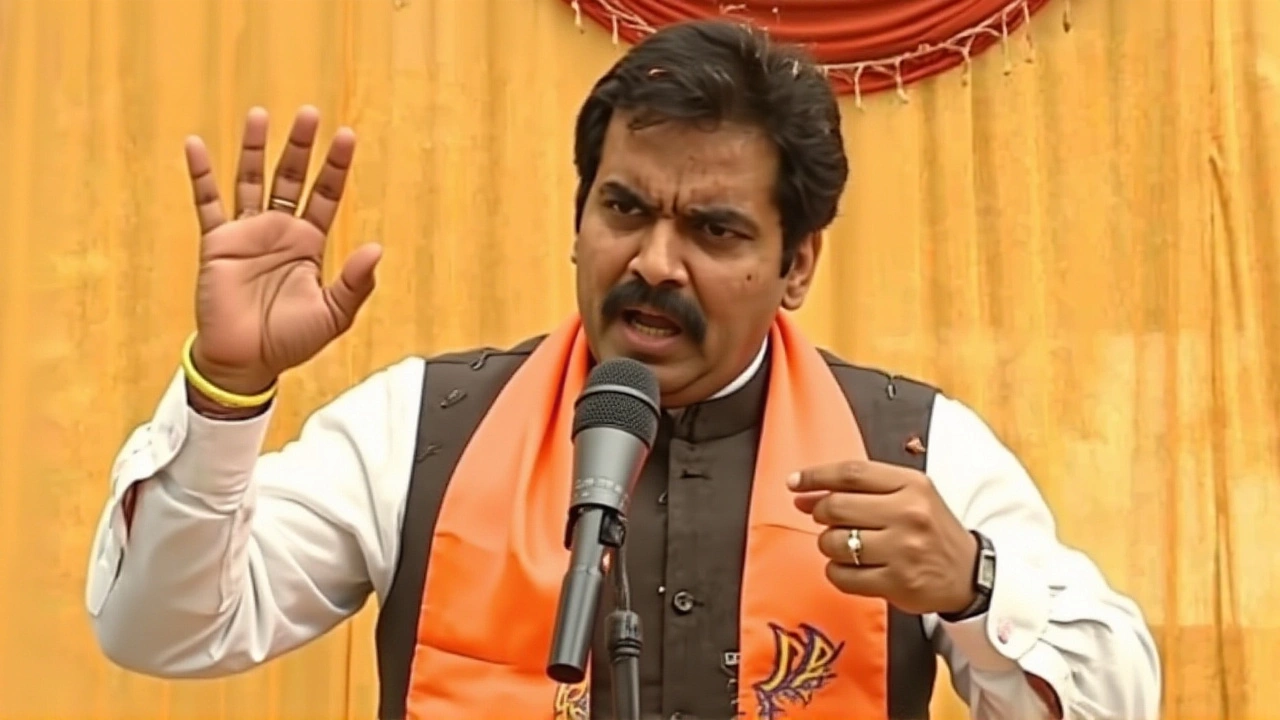
When the final counts came in on March 10, 2022, Pankaj Singh, son of Defence Minister Rajnath Singh, didn't just win his seat—he demolished the competition. In a stunning display of political dominance in Noida, Singh secured a victory margin of 1,81,513 votes against Sunil Chaudhary of the Samajwadi Party.
The result wasn't just another line item in the massive Uttar Pradesh Legislative Assembly ElectionUttar Pradesh. It was a statement. Singh polled 2,44,319 votes, capturing over 70% of the total vote share. Meanwhile, Chaudhary managed only 62,806 votes. That’s not a close race. That’s a rout.
A Historic Margin of Victory
Here’s the thing about Indian politics: big wins happen, but records are harder to break. Singh’s margin shattered the previous record held by Ajit Pawar, the Deputy Chief Minister of Maharashtra and leader of the Nationalist Congress Party. Pawar had won by 1,65,000 votes in a previous assembly election. Singh topped that by nearly 16,500 votes.
But wait—there’s an even bigger number lurking in the data. While Singh’s win was historic for Noida, it wasn’t the largest in the entire state. That title went to Sunil Sharma from Sahibabad in Ghaziabad, who won by a staggering 2,14,845 votes. Still, breaking the national record for individual constituency margins is no small feat. It signals deep-rooted support—or perhaps a lack of viable alternatives—in this rapidly urbanizing district.
The Numbers Behind the Win
Let’s look at the breakdown, because the details tell a clearer story than the headline.
- Pankaj Singh (BJP): 2,44,319 votes (70.16%)
- Sunil Chaudhary (SP): 62,806 votes (18.04%)
- Kripa Ram Sharma (BSP): 16,292 votes (4.68%)
- Pankhud Pathak (Congress): 13,494 votes (3.88%)
- Pankaj Avana (AAP): 6,551 votes
The turnout in Noida was robust at 70.16%, matching Singh’s own vote share percentage—a curious coincidence that analysts might chew on for years. What stands out isn’t just Singh’s performance, but the collapse of opposition unity. The Samajwadi Party, once a powerhouse in western UP, couldn’t crack 20% here. The Bahujan Samaj Party and Congress trailed far behind, while the Aam Aadmi Party, despite its rising national profile, failed to make a significant dent with just 6,551 votes.
Context: A Broader Regional Sweep
This wasn’t an isolated incident. If you zoom out to the wider region, the pattern becomes undeniable. Across Gautam Buddha Nagar, Ghaziabad, and Hapur districts, the BJP swept all 11 assembly seats. Not one. Eleven. The Samajwadi Party alliance didn’t even manage to open its account in these three critical districts.
In neighboring Jewar, Dhirendra Singh won. In Dadri, Tejpal Nagar took the seat. The message was consistent: in western Uttar Pradesh, the BJP’s organizational machinery and voter base were operating at peak efficiency. For the opposition, it was a sobering reminder that their traditional strongholds were eroding faster than expected.
Comparing 2017 to 2022
If you think this was a fluke, take a look back at 2017. Pankaj Singh also won Noida then, defeating Sunil Chaudhary again. But the margin was significantly smaller—just 1,04,016 votes. Back then, Chaudhary had polled 58,401 votes. Five years later, Chaudhary’s vote count actually increased slightly to 62,806, but Singh’s surged by over 80,000 votes. That growth trajectory is what really worries opposition strategists. It suggests expanding appeal, not just static loyalty.
The 2022 elections were part of a larger seven-phase poll across five states, including Uttarakhand, Goa, Punjab, and Manipur. Voting ran from February 10 to March 7, 2022. When results were declared on March 10, the BJP emerged as the clear winner in UP, securing 255 out of 403 seats. This allowed them to form a government with a full majority for the first time since 1985. Singh’s win in Noida was a microcosm of that statewide landslide.
Why This Matters
Noida isn’t just any constituency. It’s India’s IT hub, a city of migrants, professionals, and entrepreneurs. Winning here traditionally required broad-based appeal beyond caste arithmetic. Singh’s ability to consolidate such a large majority suggests he tapped into multiple demographics—possibly leveraging his father’s national stature alongside local development narratives.
For the Samajwadi Party, the loss in Noida symbolizes a deeper crisis. Their inability to compete effectively in western UP’s urban centers raises questions about their relevance in the next decade. Can they rebuild? Or has the political center of gravity shifted permanently?
Frequently Asked Questions
Who did Pankaj Singh defeat in the 2022 Noida election?
Pankaj Singh defeated Sunil Chaudhary of the Samajwadi Party. Chaudhary received 62,806 votes, while Singh secured 2,44,319 votes, resulting in a victory margin of 1,81,513 votes.
What was the vote share percentage for Pankaj Singh in Noida?
Pankaj Singh secured approximately 70.16% of the total votes cast in the Noida constituency. This high percentage reflects a dominant performance compared to other candidates who polled between 3% and 18%.
Did Pankaj Singh break any election records with this win?
Yes, Singh broke the record previously held by Ajit Pawar of the Nationalist Congress Party, who had won by 1,65,000 votes. However, the highest margin in the entire UP election was achieved by Sunil Sharma in Sahibabad, who won by over 2.14 lakh votes.
How does the 2022 result compare to the 2017 election in Noida?
In 2017, Pankaj Singh also defeated Sunil Chaudhary, but with a smaller margin of 1,04,016 votes. In 2022, Singh increased his vote count significantly, widening the gap to 1,81,513 votes, indicating growing support or declining opposition strength.
Which party performed best in the Gautam Buddha Nagar district overall?
The Bharatiya Janata Party (BJP) dominated the region, winning all 11 assembly seats across Gautam Buddha Nagar, Ghaziabad, and Hapur districts. The Samajwadi Party alliance failed to win any seat in these three districts combined.