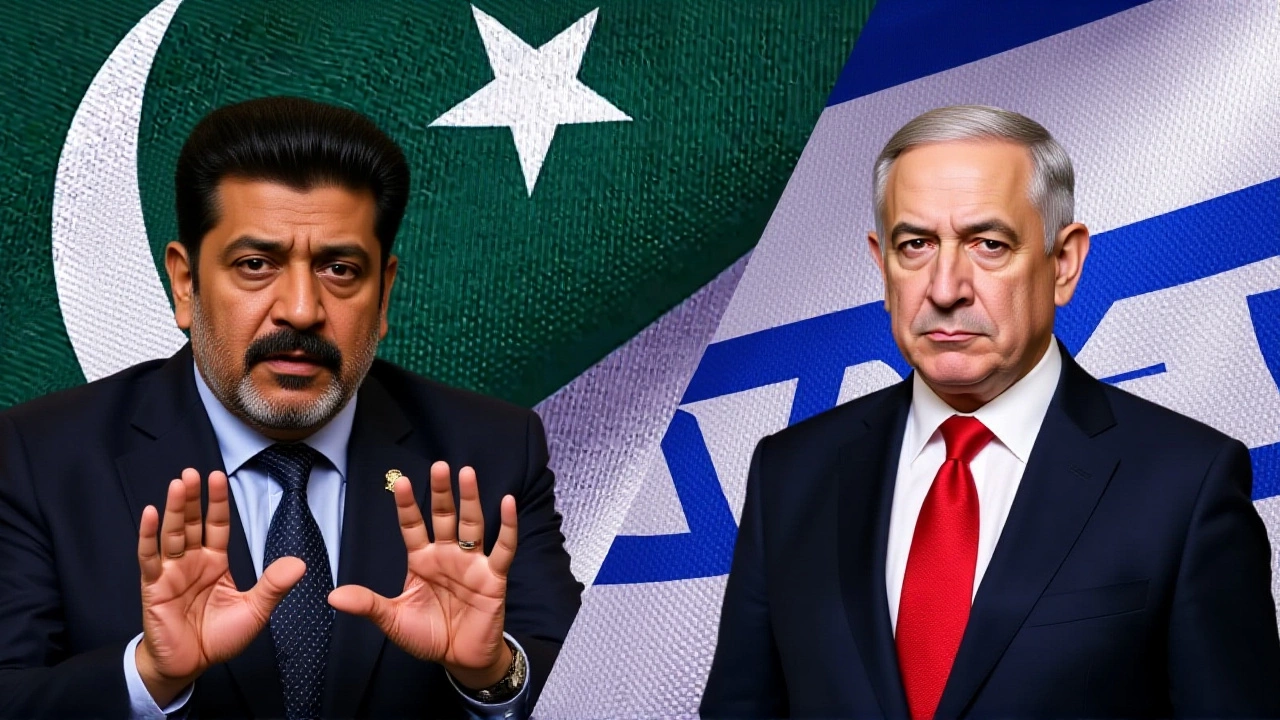
Here’s the twist no one saw coming: despite months of diplomatic alignment with Washington, Pakistan has publicly slammed the door on Donald Trump, President of the United States's latest geopolitical proposal. The request? Join the Abraham Accords and formally recognize Israel. Islamabad’s response was immediate and unyielding.
The rejection came directly from Khawaja Asif, Defense Minister of Pakistan, who made it clear during an interview that normalizing ties would be a betrayal of the nation’s core ideology. This isn't just a diplomatic snub; it’s a sharp delineation of where Pakistan draws the line between economic pragmatism and ideological sovereignty.
A Sharp Departure from Recent Alignment
If you’ve been following the headlines, you know Pakistan has been remarkably cooperative with the Trump administration over the last few months. They agreed on trade terms, security cooperation, and even some contentious regional stances. So, when Trump pushed for broader Middle Eastern integration via the Abraham Accords—specifically targeting Muslim-majority nations like Pakistan, Saudi Arabia, Turkey, and Qatar—the expectation was at least a polite non-committal shrug.
Instead, Islamabad gave him a hard "no."
Khawaja Asif didn’t mince words. Speaking to Sama TV, he stated, "We cannot choose the option of going with Israel. It would be a compromise with our basic ideology, which is not acceptable under any circumstances." That’s strong language for a defense minister talking about foreign policy. It signals that while Islamabad might want better relations with Washington, it won’t pay the price of alienating its own domestic political base or the wider Muslim world.
The Ideological Wall
To understand why this rejection matters, you have to look at the history. Pakistan hasn’t recognized Israel since its inception nearly eight decades ago. This stance isn’t just bureaucratic inertia; it’s woven into the country’s national identity and its solidarity with the Palestinian cause. For decades, the consensus across all major Pakistani political parties—from the PML-N to the PPP to the PTI—has been unwavering.
Asif highlighted this continuity, noting that breaking an eighty-year-old policy for short-term diplomatic favor with the US would be politically suicidal domestically. Imagine the backlash in Lahore or Karachi if the government suddenly started shaking hands with Israeli officials. The public outcry would likely destabilize the current administration led by Prime Minister Shehbaz Sharif.
So, while Trump sees the Abraham Accords as a transactional peace deal—a way to counter Iran and boost tech and defense ties—Pakistan sees it as an existential threat to its foundational narrative. You can’t just flip a switch on something that deep without causing massive internal friction.
Trump’s Broader Middle East Gamble
This rejection is part of a larger, somewhat risky strategy by Trump. He’s trying to expand the Abraham Accords framework, originally signed in September 2020 between Israel, the UAE, and Bahrain (later joined by Morocco and Sudan), to include heavyweight players like Saudi Arabia, Turkey, and potentially even Iran.
The logic? If these countries normalize relations with Israel, they create a unified front against Iranian influence in the region. Plus, there’s the economic angle: access to Israeli cybersecurity, agriculture tech, and military hardware. Senator Lindsey Graham recently called this potential expansion "the greatest and most impactful agreement in history," suggesting high hopes in Washington for a total regional reset.
But here’s the thing: the original accords worked because the Gulf states had specific security concerns regarding Iran and saw tangible economic benefits. Pakistan doesn’t share those same immediate security pressures with Israel. In fact, Pakistan shares borders with India, which has full diplomatic ties with Israel anyway. There’s no strategic vacuum for Pakistan to fill by joining the club.
What Happens Next?
For now, the ball is in Trump’s court. Will he view Pakistan’s refusal as a dealbreaker, or will he pivot to other targets like Saudi Arabia? The details are still unclear, but diplomats suggest Washington will continue pressuring Riyadh and Ankara, knowing Pakistan is a harder nut to crack ideologically.
For Pakistan, the message is consistent: we’re open to dialogue with the US, but we’re not selling our soul for it. This move reinforces Islamabad’s position as an independent actor in South Asian geopolitics, unwilling to be drawn entirely into Washington’s orbit on issues that touch raw domestic nerves.
We’ll be watching closely to see if this stance holds firm as pressure mounts, or if backchannel negotiations reveal a more nuanced reality. But for today, the headline is simple: Pakistan said no.
Frequently Asked Questions
Why did Pakistan reject the Abraham Accords?
Pakistan rejected the accords because recognizing Israel contradicts its longstanding national ideology and solid support for the Palestinian cause. Defense Minister Khawaja Asif stated that such a move would be a compromise of their "basic ideology" and unacceptable domestically after nearly eight decades of non-recognition.
Who are the current members of the Abraham Accords?
The original signatories were Israel, the United Arab Emirates, and Bahrain in September 2020. Later, Morocco and Sudan also joined the framework. These agreements normalized diplomatic, economic, and security ties between these Arab nations and Israel without resolving the Palestinian issue first.
How does this affect US-Pakistan relations?
While this creates a point of contention, it doesn't necessarily derail the entire relationship. Pakistan has aligned with Trump on many other issues recently. However, it highlights the limits of US influence on core ideological issues in Islamabad, signaling that Pakistan prioritizes domestic stability and regional Muslim solidarity over pleasing Washington on this specific matter.
What is Donald Trump's goal with expanding the Accords?
Trump aims to create a broader coalition of Muslim-majority nations allied with Israel to counter Iranian influence in the Middle East. He believes this unity will bring regional stability and open up significant economic and technological partnerships, describing it as a historic opportunity for peace and prosperity.
Will Pakistan ever recognize Israel?
Currently, there is no indication that Pakistan will change its stance. Public opinion in Pakistan remains strongly pro-Palestine, and all major political parties adhere to the policy of non-recognition. Any shift would require a fundamental change in both domestic politics and the resolution of the Palestinian conflict, neither of which appears imminent.